About Symposium
Cooperative Financial Institutions (CFIs), including cooperative banks, credit unions, and mutual financial organizations, are among the most resilient and socially grounded pillars of the global financial system. Built on democratic ownership and member participation, they promote financial models that prioritize human needs, productive investment, and long-term stability. For decades, CFIs have expanded access to financial services for communities and sectors often underserved by conventional finance, including micro, small and medium-sized enterprises, agricultural producers, women and youth entrepreneurs, and communities in developing and vulnerable regions.
Recent global discussions have emphasized the need for financial systems that are inclusive, equitable, and locally rooted to support sustainable development. International commitments such as the Sevilla Commitment of the Fourth International Conference on Financing for Development and the Doha Political Declaration of the World Social Summit 2025 highlight the importance of financial models that advance social inclusion and long-term development goals.
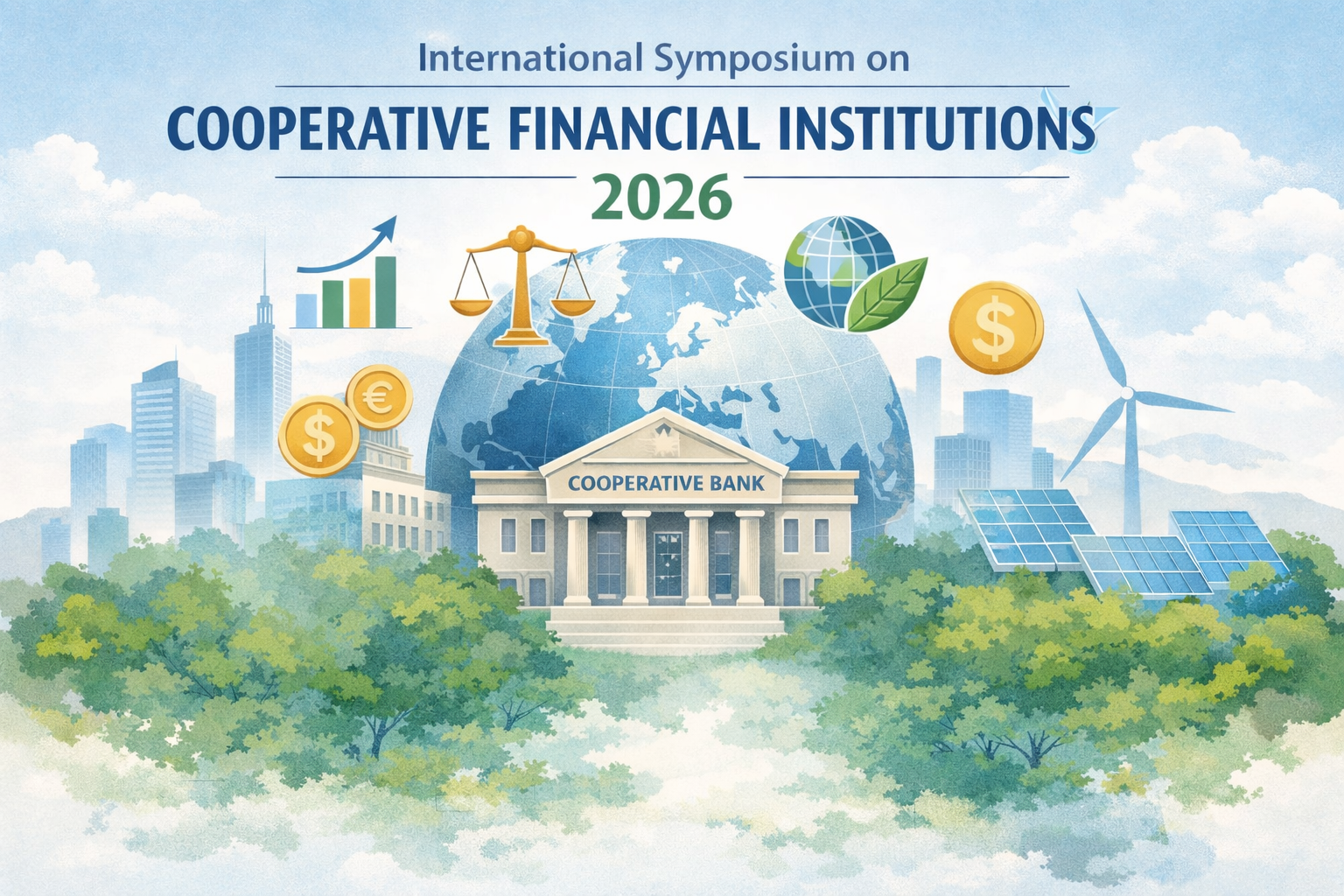
The International Symposium on Cooperative Financial Institutions provides a global platform to examine the role of CFIs in advancing inclusive finance and equitable economic growth, particularly in the context of the renewed global focus on cooperatives during the UN International Year of Cooperatives 2025.



Thematic Dimensions
The Symposium will explore three interconnected thematic dimensions reflecting the priorities of the ICA Strategy and the evolving realities of cooperative finance.
Competitiveness & Access to Capital
This dimension examines the business foundations that enable Cooperative Financial Institutions (CFIs) to remain competitive, resilient, and scalable in evolving financial markets. It explores how CFIs mobilize member capital, retain earnings, and access external financing while preserving cooperative identity and governance.
Investment, Intersectorality & Impact
CFIs play a critical role in mobilizing domestic resources and directing them toward productive sectors including small enterprises, agriculture, housing, and community infrastructure. This dimension explores how cooperative finance can strengthen investment vehicles, social and green finance, and partnerships with development institutions.
Governance, Regulation & People-Centredness
This dimension focuses on strengthening cooperative identity, governance systems, and institutional capacity as foundations of legitimacy and resilience. It explores regulatory frameworks, digital transformation, leadership development, and youth engagement to sustain the future of cooperative finance.
Meet Our Distinguished Speakers

Marjan Trompetter
Chairperson of the Supervisory Board of the Rabobank Cooperative, The Netherlands

Maria Amparo Grau Ruiz
Universidad Complutense de Madrid, Spain

Erin O’Hern
International Advocacy and Regulatory Counsel, World Confederation of Credit Unions

Rose Karimi Kiwanuka
Regional Director, ICA Africa
Expected Outcomes
The Symposium is expected to produce the following key outcomes:
Tracking Progress & Policy Trends
Mapping the progress of the ICBA report on Legislation & Cooperative Financial Institutions, summarizing key trends, innovations, and policy challenges.
Sevilla Commitment Alignment
A clear roadmap for aligning CFIs with the Sevilla Commitment financing priorities, including domestic resource mobilization, sustainable finance, private sector engagement, and resilience building.
Doha Declaration Alignment
A roadmap for aligning CFIs with the Doha Declaration social development priorities, including poverty eradication, decent work, social protection, and inclusion.
Strengthened Global Partnerships
Strengthened collaboration among cooperative financial institutions, UN agencies, governments, and financial regulators.
Targeted Technical Assistance
Identification of priority technical assistance areas, including digitalization, governance reform, resilience finance, and youth engagement.
Programme Schedule
| Time (EDT) | Session | Speakers / Details |
|---|---|---|
| 18h30 – 20h30 | Delegates’ Dinner |
Bukhara Grill, 120 E 39th St, New York, NY 10016, United States. Pre-registration required. |
| Time (EDT) | Session | Speakers / Panelists |
|---|---|---|
| 09h00 – 10h00 | Registration & Badge Collection | ICA-ICBA Volunteers |
| 10h00 – 11h30 | Inauguration & Opening Keynote Address |
|
| 11h50 – 13h20 | Roundtable: Practice – Intercooperation and Access to Finance |
|
| 14h35 – 16h00 | Roundtable: Promote – Policies that Advance Investment for a Stronger Future |
|
| 16h30 – 18h00 | Roundtable: Protect – Adequate Regulation for Cooperative Financial Institutions |
|
| Time (EDT) | Session | Speakers / Panelists |
|---|---|---|
| 10h00 – 11h50 | Roundtable: Fostering Purposeful Leadership in Cooperative Financial Institutions |
|
| 12h00 – 13h00 | Closing Keynote Address & Vote of Thanks |
Jeroen Douglas – Director-General, International Cooperative Alliance Mirjam ‘t Lam – Chief Executive Officer, Oikocredit International Bhima Subrahmanyam Andrew Alimadi [TBC] Kabir Ayinde Tukur |
| 13h00 – 15h30 | Lunch & Guided Tour of the United Nations Building |
Pre-registration required. Venue access and guided tour participation are subject to UNHQ security requirements. |
Frequently Asked Questions
Find answers to common questions related to registration and visa facilitation for the ICBA Symposium 2026.